Why Body Products and Facial Products Are Not Always Interchangeable
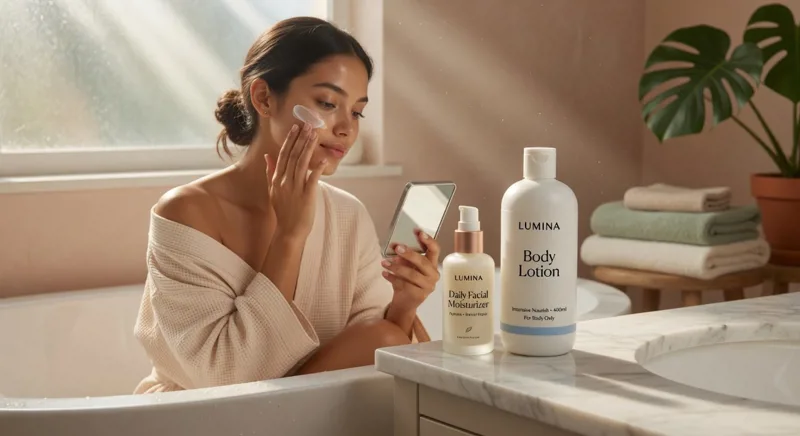
Why body products and facial products are not always interchangeable comes down to more than packaging. Facial skin has different oil levels, sensitivity, and concerns than skin on the arms, legs, or torso. Using the wrong formula may lead to clogged pores, irritation, dryness, or breakouts.
Face Skin and Body Skin Have Different Needs
Although the skin on your face and body shares the same basic structure, it does not behave identically everywhere. Facial skin generally contains more oil glands and may be thinner and more reactive than skin on areas such as the thighs, back, or torso. The neck and forearms can also be relatively delicate.
Body skin, meanwhile, often has to cope with larger areas of dryness, friction from clothing, shaving, and environmental exposure. Body care products are commonly designed to soften rough or flaky skin, while facial products may focus on acne, enlarged pores, uneven skin tone, fine lines, or sensitivity.
That difference explains why a rich body cream can feel comfortable on dry elbows but heavy or pore-clogging on an oily forehead.
Body Lotion vs. Facial Moisturizer: What Is the Difference?
Most moisturizers use a combination of three ingredient categories:
- Humectants: Ingredients such as glycerin and hyaluronic acid attract water to the skin.
- Emollients: These smooth rough areas by filling spaces between skin cells.
- Occlusives: Ingredients such as petrolatum, mineral oil, and certain silicones help reduce water loss.
The difference is often the balance, texture, concentration, and supporting ingredients. Body lotions and body creams may contain heavier oils, waxes, butters, or occlusives because body skin frequently needs long-lasting moisture. Facial moisturizers are more likely to be lightweight, non-comedogenic, fragrance-free, or formulated for a specific skin type.
However, the label alone does not tell the whole story. Some body products contain excellent facial ingredients, including ceramides, glycerin, and hyaluronic acid. The key is whether the complete formula suits your face and its current condition.
Why Body Products Can Cause Facial Breakouts
Many body lotions are perfectly safe for dry skin but too rich for acne-prone or oily facial skin. Heavy emollients and occlusives can trap sweat, oil, and debris, particularly when applied to areas with active acne or naturally larger pores.
Look for facial products labeled:
- Non-comedogenic
- Oil-free
- Fragrance-free
- Suitable for sensitive or acne-prone skin
“Non-comedogenic” means the product is designed to be less likely to clog pores, but it is not an absolute guarantee. Every person’s skin responds differently, so patch testing is still sensible when trying a new moisturizer.
Fragrance Is a Common Source of Irritation
Body care products are often scented because fragrance can make a shower or moisturizing routine feel more enjoyable. Facial skin, especially skin affected by eczema, rosacea, dryness, or a damaged skin barrier, may react poorly to fragrance and essential oils.
Possible signs of irritation include burning, stinging, redness, itching, tightness, and flaking. Fragrance can also make already-dry skin feel worse. If your face is sensitive, a simple fragrance-free moisturizer is usually a safer starting point than a heavily scented body butter.
Are Facial Products Safe to Use on the Body?
Usually, yes—but “safe” does not always mean practical or necessary. A facial moisturizer can hydrate the body, but using it over large areas may be expensive and inconvenient. Facial products are often packaged in smaller containers and may include specialized ingredients for pigmentation, acne, or aging skin.
Active ingredients require extra caution. Facial products containing retinol, salicylic acid, glycolic acid, or other exfoliating ingredients may irritate sensitive body areas, especially after shaving. Conversely, a body product containing an active ingredient may be too strong for the face if its concentration or formula is not intended for facial use.
When Can You Use One Product for Both?
A basic, fragrance-free moisturizer may work well on both the face and body if it does not cause dryness, burning, or clogged pores. Ingredients such as glycerin, ceramides, panthenol, and hyaluronic acid are commonly useful across different areas of the skin.
A shared product may be reasonable when:
- Your skin is normal, dry, and not prone to acne.
- The formula is gentle and fragrance-free.
- It does not contain irritating exfoliants or strong active ingredients.
- You have tested it on a small area first.
For sunscreen, choose a broad-spectrum product with SPF 30 or higher and apply it to exposed skin on both the face and body. A facial sunscreen may be more comfortable under makeup, while a body sunscreen may be designed for easier application over larger areas.
How to Choose the Right Product
- Identify the concern. Dryness, acne, sensitivity, discoloration, and rough texture require different approaches.
- Read the ingredient list. A shorter, simpler formula can be easier to tolerate, particularly for sensitive skin.
- Consider texture. Gel creams and lightweight lotions may suit oily facial skin, while creams and ointments often help very dry body skin.
- Patch test first. Apply a small amount to an inconspicuous area and watch for irritation over the next day or two.
- Stop if your skin reacts. Persistent redness, swelling, severe itching, or painful rash deserves medical advice.
The Bottom Line
Understanding why body products and facial products are not always interchangeable can help you avoid unnecessary breakouts and irritation. Some gentle moisturizers can serve both purposes, but facial skin often benefits from lighter, non-comedogenic, fragrance-free formulas, while body skin may need richer, more protective textures. Choose based on the skin area, the product ingredients, and your specific concerns—not just convenience or attractive packaging.