What to Consider When Sunscreen Does Not Sit Well Under Makeup
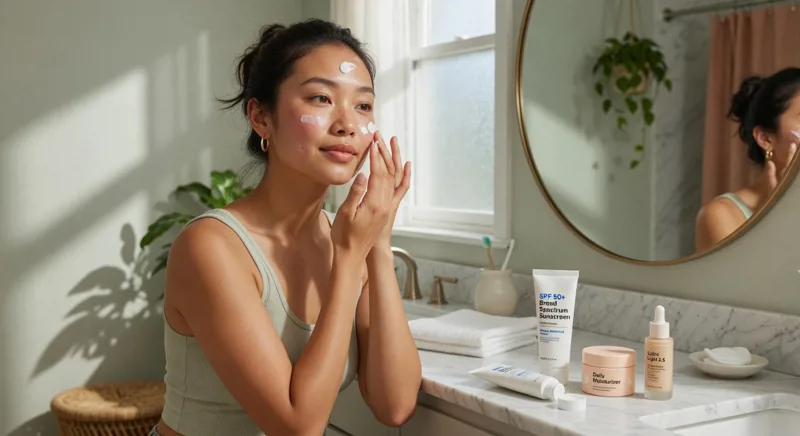
When sunscreen does not sit well under makeup, the problem is usually a combination of formula, application technique, skin type, and product layering. Pilling, greasiness, patchiness, or makeup that slides away can often be improved without sacrificing daily sun protection.
Why Does Sunscreen Pill Under Makeup?
Pilling happens when sunscreen rolls into small flakes instead of forming a smooth, even layer. This may occur when several products contain film-forming ingredients, silicones, polymers, or powders that do not blend well together.
Applying too many skincare products can also make pilling more likely. For example, layering toner, serum, moisturizer, facial oil, sunscreen, primer, and foundation gives each product more opportunities to interact poorly.
Rubbing is another common cause. If sunscreen has started to set, vigorous massaging can lift it from the skin. Try pressing and smoothing the product gently rather than repeatedly working it into the face.
Check Your Sunscreen’s Texture and Ingredients
The best sunscreen under makeup depends on your skin type and cosmetic preferences. A rich cream may feel comfortable on dry skin but look shiny beneath foundation. Conversely, a matte gel may be ideal for oily skin but emphasize flakes on dehydrated skin.
For oily or acne-prone skin
Look for a lightweight, noncomedogenic sunscreen with a fluid, gel, or matte finish. Ingredients such as silica can help absorb excess oil, while a noncomedogenic label indicates that the formula is designed to be less likely to clog pores. Heavier oils, occlusive ingredients, and rich emollients may feel greasy under makeup for some people.[2]
For dry or dehydrated skin
A hydrating sunscreen containing ingredients such as ceramides, hyaluronic acid, glycerin, or panthenol may sit more comfortably on the skin. However, avoid applying too much moisturizer underneath. Excess product can cause foundation to separate or slide.
For sensitive skin
If sunscreen causes stinging, redness, itching, or a rash, the issue may be irritation or an allergic reaction rather than poor makeup compatibility. Mineral sunscreen formulas containing zinc oxide or titanium dioxide are often considered suitable options for sensitive skin, although any ingredient can cause a reaction in some individuals.
Stop using a product that causes a persistent rash or significant discomfort. A dermatologist can help identify possible triggers, especially if several sunscreens have caused similar reactions.
Use the Right Application Order
A simple routine usually performs better under makeup than a complicated one. Try this order:
- Cleanse gently and pat the skin dry.
- Apply a thin layer of moisturizer if your skin needs it.
- Apply broad-spectrum sunscreen evenly and generously.
- Allow the sunscreen to settle before using primer or makeup.
- Apply foundation by pressing or stippling rather than dragging it across the skin.
Dermatologists generally recommend applying sunscreen to dry skin about 15 minutes before going outdoors and reapplying approximately every two hours when outside, or after swimming and sweating.[1][3] Makeup with SPF can add convenience, but it should not replace a properly applied sunscreen layer.
How Long Should You Wait Before Applying Makeup?
There is no universal waiting time that works for every formula, but giving sunscreen several minutes to form an even film can make a noticeable difference. If the product still feels wet or slippery, wait a little longer before applying primer or foundation.
Rather than relying on a thick moisturizer and a long waiting period, use fewer layers and apply each one sparingly. A thin, even layer of sunscreen is more likely to create a smooth base than a heavy application rubbed repeatedly into the skin.
Choose Makeup That Works With Your Sunscreen
Sometimes the sunscreen is not the only source of the problem. Silicone-rich primers, water-based foundations, oils, and long-wear formulas may not layer well together. If products separate, test a simpler combination:
- Lightweight moisturizer, sunscreen, and liquid foundation
- Sunscreen, a compatible primer, and powder foundation
- Hydrating sunscreen and a flexible, natural-finish foundation
Test the full combination on one area of your face before an important event. Pay attention to whether the makeup pills immediately, becomes patchy after a few hours, or turns excessively shiny.
What to Do When Sunscreen Looks Greasy
Greasy sunscreen does not necessarily mean it is ineffective, but shine can make makeup difficult to control. Start by reducing the amount of skincare underneath. You can also choose a sunscreen described as lightweight, oil-free, matte, or designed for oily skin.
After the sunscreen has set, lightly press a clean tissue over areas that look shiny. Avoid aggressively wiping, since that can remove sunscreen. A small amount of translucent powder may help, but powder alone should not be treated as a substitute for sunscreen.
Do Not Compromise on Sun Protection
Cosmetic compatibility matters, but even coverage matters more. Choose a broad-spectrum sunscreen with SPF 30 or higher, apply it as directed, and use additional protection such as shade, sunglasses, and a wide-brimmed hat.[1]
If makeup makes reapplication difficult, consider reapplying sunscreen before makeup when possible, using a sunscreen stick carefully for targeted touch-ups, or removing and reapplying the base before extended outdoor exposure. Sunscreen sprays and powders may be convenient, but achieving consistent facial coverage can be difficult unless the product is used exactly as directed.
Final Thoughts
When sunscreen does not sit well under makeup, focus on simplifying the routine, matching the formula to your skin type, and allowing each layer to settle. Change one product at a time so you can identify the real cause of pilling, shine, separation, or irritation. The goal is a comfortable, even sunscreen layer that protects your skin and supports makeup that looks natural throughout the day.