The Difference Between a Cosmetic Claim and a Treatment Claim
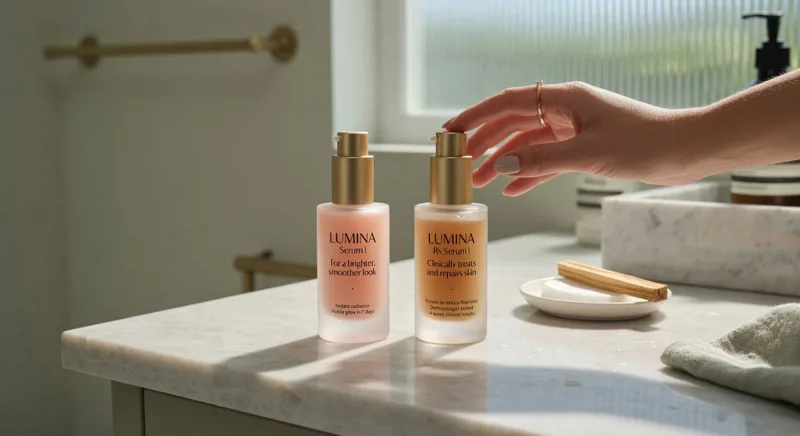
The difference between a cosmetic claim and a treatment claim comes down to what a product promises to do. Cosmetic claims focus on appearance, while treatment claims suggest that a product can address a disease, condition, or biological function.
What Is a Cosmetic Claim?
A cosmetic claim describes an effect related to cleansing, beautifying, improving appearance, or changing how someone looks. These claims generally concern the surface or visible characteristics of the body rather than its underlying structure or function.
Examples of cosmetic claims include:
- “Leaves skin looking smoother.”
- “Helps improve the appearance of fine lines.”
- “Adds shine to dull hair.”
- “Creates a more even-looking complexion.”
- “Provides a fresh, clean feeling.”
The product may temporarily improve the appearance of skin or hair, but it should not imply that it diagnoses, treats, cures, or prevents a medical condition. In the United States, cosmetic labeling claims must be truthful and not misleading, although cosmetic products do not generally require FDA premarket approval.[5]
What Is a Treatment Claim?
A treatment claim states or implies that a product can treat, prevent, cure, reduce, or manage a disease, symptom, or health condition. It may also suggest that the product changes the body’s structure or affects a biological function.
Examples include claims that a product can:
- Treat acne, eczema, psoriasis, or dandruff.
- Prevent sunburn or reduce inflammation.
- Restore hair growth.
- Reduce cellulite or varicose veins.
- Increase collagen production or regenerate skin cells.
- Repair damaged tissue or alter pigment production.
Under the Federal Food, Drug, and Cosmetic Act, a product intended to diagnose, cure, mitigate, treat, or prevent disease—or to affect the structure or function of the body—may be legally classified as a drug, even when it is marketed as a beauty product.[1][4]
Cosmetic Claim vs. Treatment Claim: Quick Comparison
| Cosmetic claim | Treatment claim |
|---|---|
| Focuses on appearance | Focuses on disease, symptoms, or body function |
| Uses language such as “softens” or “brightens” | Uses language such as “treats,” “prevents,” or “repairs” |
| Usually describes a visible or sensory benefit | Suggests a medical or physiological effect |
| Generally regulated as a cosmetic | May cause the product to be regulated as a drug |
| Still must be truthful and non-misleading | Requires applicable drug compliance and scientific substantiation |
Why the Wording Matters
Small wording changes can alter the regulatory meaning of a claim. For example, “improves the appearance of blemishes” is typically cosmetic language, while “treats acne” is a treatment claim. Similarly, “helps hair look fuller” describes appearance, whereas “stimulates hair growth” suggests a biological effect.
Consider these examples:
- Cosmetic: “Helps skin look firmer.”
- Treatment: “Restores skin elasticity by rebuilding collagen.”
- Cosmetic: “Reduces the appearance of dark spots.”
- Treatment: “Reduces melanin production to treat hyperpigmentation.”
- Cosmetic: “Soothes the feeling of dry skin.”
- Treatment: “Treats inflammation caused by eczema.”
Context matters, too. Regulators may consider product packaging, website copy, social media posts, testimonials, advertisements, product names, and accompanying instructions when determining intended use. A disclaimer cannot always neutralize a strong medical promise elsewhere in the marketing.
Cosmeceutical Claims Can Be Especially Confusing
The term “cosmeceutical” is commonly used for products positioned between cosmetics and pharmaceuticals. However, it is not a separate legal category under U.S. federal law. A product is generally evaluated according to its ingredients, intended use, and claims—not simply the label used by the brand.
A serum can remain a cosmetic when it claims to improve the appearance of wrinkles. But if its marketing says it changes skin structure, regenerates cells, or treats a medical condition, the product may fall within drug regulations.[4][6]
What Evidence Is Needed for Treatment Claims?
Health-related advertising claims must be supported by appropriate evidence before they are presented to consumers. The Federal Trade Commission expects objective health claims to have competent and reliable scientific support, and companies must avoid advertising that is false or misleading.[2][3]
The level of evidence depends on the exact promise. A claim about temporary moisturization may need different support from a claim that a product treats a chronic skin condition. Stronger claims generally require stronger scientific evidence, and clinical research may be necessary for medical efficacy claims.
Common Mistakes to Avoid
- Using medical verbs casually: Words such as “heal,” “repair,” “cure,” and “prevent” can imply treatment.
- Making ingredient-based assumptions: The presence of a familiar ingredient does not automatically prove a treatment benefit.
- Relying only on testimonials: Customer experiences do not replace adequate scientific substantiation.
- Ignoring implied claims: Before-and-after images, symptom-focused headlines, and disease references can communicate a treatment message without using the word “treat.”
- Assuming a disclaimer solves the problem: A “not intended to diagnose or treat” statement may not overcome contradictory promotional language.
How to Write Safer, Clearer Cosmetic Claims
When the intended product category is cosmetic, keep the wording focused on visible results, feel, texture, or routine use. Claims such as “smooths the appearance of fine lines,” “brightens the look of tired skin,” and “helps hair appear thicker” are more clearly appearance-oriented than medical promises.
Before publishing packaging or advertising copy, review the complete consumer experience—not just the product label. The safest claim is one that accurately reflects the evidence, avoids exaggerated expectations, and does not imply a disease-related benefit the product cannot substantiate.
Final Takeaway
The difference between a cosmetic claim and a treatment claim is the difference between changing appearance and claiming a medical or biological effect. Cosmetic claims describe how a person looks or feels; treatment claims address disease, symptoms, prevention, or body function. Careful wording, credible evidence, and attention to the entire marketing context help keep claims accurate, transparent, and compliant.