The Sunscreen Application Details People Often Miss
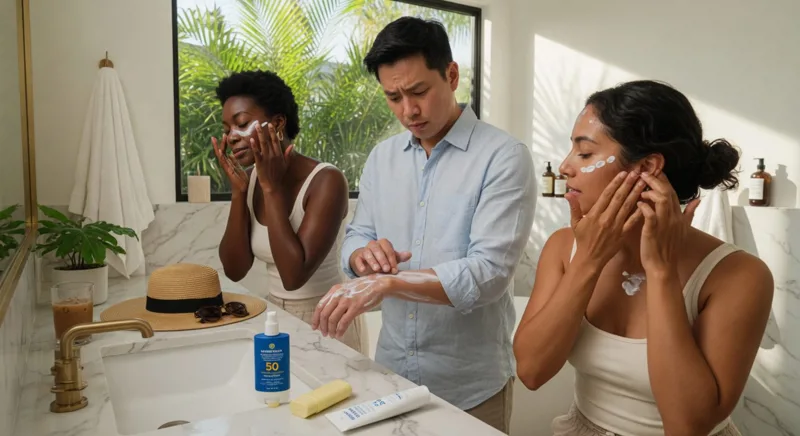
Sunscreen works best when you apply it correctly—not simply when you remember to use it. From overlooked areas and insufficient amounts to missed reapplication, these small sunscreen application details can make a major difference in daily sun protection.
Use Enough Sunscreen to Cover Exposed Skin
One of the most common sunscreen mistakes is applying too little. A thin, quick swipe may feel convenient, but it can leave large areas underprotected and reduce the protection shown on the label.
For most adults, about 1 ounce of sunscreen—roughly a shot glass full—is recommended to cover the body parts not protected by clothing. For the face, neck, and ears, use approximately 1 teaspoon, or enough to cover the length of two fingers.[3][5]
You may need more if you have a larger body size or are wearing clothing that leaves extensive skin exposed. Instead of treating sunscreen as a finishing touch, think of it as a protective layer that must be spread evenly.
Apply Sunscreen Before You Go Outside
Another detail people often miss is timing. Apply sunscreen about 15 minutes before sun exposure so it has time to form an even protective layer on the skin.[1][2]
Waiting until you reach the beach, hiking trail, or outdoor event can leave your skin exposed during the most easily forgotten part of the day—getting from the car to your destination. Make sunscreen part of your morning skincare routine, even when the forecast looks cloudy.
Do Not Forget These Commonly Missed Areas
Most people cover their cheeks, forehead, and arms but overlook smaller areas that receive plenty of ultraviolet exposure. A thorough application should include:
- Ears and the skin behind the ears
- Hairline and part line
- Back of the neck
- Eyebrows and temples
- Lips, using a lip balm with sunscreen
- Backs of the hands
- Top of the feet and ankles
- Shoulders and upper chest
- Backs of the knees
- Exposed scalp areas, especially with thinning hair
The tops of the feet, ears, scalp, and lips are particularly easy to miss but are regularly exposed to sunlight.[2][6] A wide-brimmed hat, sunglasses, and protective clothing add another layer of defense, but they do not replace sunscreen on uncovered skin.
Choose the Right Sunscreen Label
Product labels can be confusing, especially when comparing SPF numbers, mineral sunscreen, chemical sunscreen, and water-resistant formulas. For everyday use, dermatology guidance generally recommends a broad-spectrum sunscreen with SPF 30 or higher and water resistance when sweating or swimming.[7]
What “Broad Spectrum” Means
Broad-spectrum sunscreen protects against both UVA and UVB rays. SPF primarily indicates protection against sunburn from UVB, while UVA exposure also contributes to premature skin aging and other long-term skin damage.[7]
What “Water Resistant” Means
No sunscreen is waterproof. Products labeled water resistant are tested to maintain their stated protection for either 40 or 80 minutes while swimming or sweating, depending on the label.[1][4]
Even if your skin remains dry, reapply at least every two hours while outdoors. Swimming, heavy sweating, and towel drying can remove sunscreen sooner.
Reapply Even When You Do Not Feel Burned
Sunscreen gradually wears away through sweat, water, clothing, touching your face, and normal movement. Reapply approximately every two hours when outdoors, and sooner after swimming or heavy sweating.[1][5]
Do not wait for redness or warmth. Sunburn is a sign that damage has already occurred, not a reminder that sunscreen is finally needed. If you spend the day outdoors, set a phone reminder or keep a travel-size sunscreen in an easily accessible place.
Spread It Evenly Instead of Rubbing It Away
Sunscreen should be distributed across all exposed skin in a smooth, even layer. Apply it gently and thoroughly rather than rubbing until every trace disappears.[2]
Spray sunscreen requires special attention. Do not spray it directly onto the face, avoid inhaling the mist, and spray generously before rubbing it into the skin. Sunscreen sticks can be useful around the eyes, nose, and ears, but several passes are usually needed for adequate coverage.
Remember Makeup, Moisturizer, and Indoor Light
Sunscreen should generally be the final step of your morning skincare routine, after moisturizer and before makeup. Makeup with SPF can provide helpful additional coverage, but it usually should not be the only sunscreen layer because many people apply too little foundation or powder to achieve the labeled protection.
Daily sunscreen is especially useful for people who spend time near windows, drive frequently, work outdoors, or sit in bright environments. Cloud cover does not eliminate ultraviolet exposure, so sunscreen remains relevant beyond hot, sunny beach days.
A Simple Sunscreen Application Checklist
- Choose broad-spectrum SPF 30 or higher.
- Check the expiration date and follow the product directions.
- Apply about 15 minutes before going outdoors.
- Use enough to cover every exposed area.
- Cover ears, lips, hands, feet, neck, and scalp gaps.
- Reapply at least every two hours outdoors.
- Reapply after swimming, sweating, or towel drying.
- Add shade, sunglasses, hats, and protective clothing whenever possible.
The Bottom Line
The sunscreen application details people often miss are usually simple: use enough, apply early, cover overlooked areas, and reapply consistently. When combined with shade and sun-protective clothing, these habits create a more reliable daily sun protection routine—and help sunscreen perform much closer to the protection promised on its label.