The Difference Between Removing Makeup and Cleansing Skin
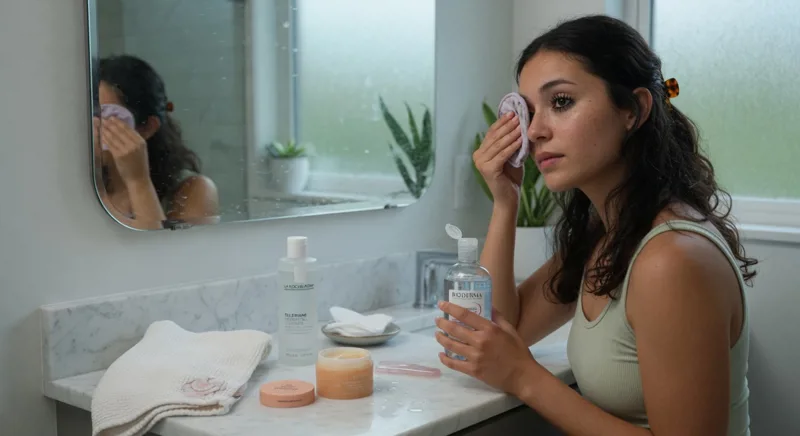
The difference between removing makeup and cleansing skin is simple: makeup removal lifts cosmetics from the surface, while cleansing removes sweat, oil, dirt, sunscreen, and remaining residue. Understanding both steps can help prevent clogged pores, irritation, dryness, and breakouts while keeping your skin barrier comfortable.
What Does Makeup Removal Do?
Makeup remover is designed to dissolve or lift cosmetic products, including foundation, concealer, lipstick, eyeliner, and waterproof mascara. Many makeup formulas contain oils, waxes, pigments, and long-wear ingredients that a standard face wash may not fully remove.
Common makeup removal products include:
- Micellar water
- Cleansing balms
- Oil-based cleansers
- Makeup-removing creams
- Fragrance-free makeup wipes
Makeup removal is especially useful at night, when leaving cosmetics on the skin can contribute to blocked pores, irritation, and blemishes. It is also helpful around the eyes, where waterproof mascara and eyeliner can be difficult to remove with a regular cleanser alone.
What Does Cleansing Skin Do?
Facial cleansing is the process of washing the skin to remove daily buildup. A gentle facial cleanser can help lift excess sebum, perspiration, environmental pollutants, dead skin cells, sunscreen, and traces of makeup remover.
Unlike a dedicated makeup remover, a cleanser is primarily intended to clean the skin itself. The best cleanser depends on your skin type and concerns:
- Dry or sensitive skin: Choose a creamy, fragrance-free cleanser that supports the skin barrier.
- Oily or acne-prone skin: A gentle foaming or gel cleanser may help remove excess oil without harsh scrubbing.
- Combination skin: Use a balanced cleanser that cleans without leaving tight, dry areas.
- Reactive skin: Avoid unnecessary fragrance, alcohol, abrasive particles, and strong essential oils.
Dermatology guidance generally favors a gentle, non-abrasive cleanser, lukewarm water, and fingertips rather than rough washcloths or exfoliating brushes. Scrubbing harder does not necessarily clean better and can irritate the skin barrier.[4]
Makeup Removal vs. Cleansing: The Key Differences
| Makeup removal | Skin cleansing |
|---|---|
| Targets foundation, mascara, lipstick, and other cosmetics | Targets oil, sweat, dirt, sunscreen, and daily impurities |
| Often uses micellar water, balm, or oil | Usually uses a water-based facial cleanser |
| Prepares the skin for washing | Finishes the cleansing process and refreshes the skin |
| May not remove all sweat, oil, or environmental debris | May not completely dissolve waterproof or long-wear makeup |
In other words, makeup removal and cleansing are related but not identical. One removes cosmetic residue; the other cleans the skin.
Do You Need to Remove Makeup Before Cleansing?
If you wear heavy, waterproof, or long-lasting makeup, removing it before washing your face is often helpful. Many standard facial cleansers cannot dissolve every trace of waterproof mascara, full-coverage foundation, or long-wear lipstick.[3]
However, not everyone needs two separate products every night. A mild cleansing balm or oil cleanser may remove makeup and cleanse at the same time. If your face feels clean and comfortable afterward, an additional step may be unnecessary.
How to Double Cleanse Correctly
Double cleansing means using an oil-based product first, followed by a water-based cleanser. The first step breaks down makeup, sunscreen, and sebum; the second removes remaining residue from the skin.[1]
- Apply a cleansing balm or oil cleanser to dry skin, following the product instructions.
- Massage gently, especially over areas with foundation, sunscreen, or eye makeup.
- Rinse with lukewarm water, avoiding hot water.
- Apply a gentle water-based facial cleanser.
- Rinse thoroughly and pat your face dry with a soft towel.
- Finish with moisturizer while the skin is still slightly damp.
Micellar water followed by a gentle cleanser is another option. Double cleansing can be useful for people who regularly wear makeup or water-resistant sunscreen, but it is not essential for everyone. Washing twice when the skin does not need it may increase dryness or irritation.[2]
Common Mistakes to Avoid
- Sleeping in makeup, even when you feel too tired for a full routine
- Rubbing the eye area aggressively to remove mascara
- Using hot water that leaves the face feeling tight
- Scrubbing to remove stubborn foundation
- Using heavily fragranced wipes on sensitive skin
- Over-cleansing oily skin in an attempt to stop shine
- Skipping moisturizer after washing
When possible, choose non-comedogenic products, particularly if you have acne-prone skin. If you use makeup-removing wipes, a fragrance-free formula may be less irritating, but wipes should not replace proper cleansing when residue remains.
Can You Cleanse Without Removing Makeup First?
Yes, if your cleanser is specifically formulated to remove makeup and your skin feels clean afterward. A cleansing balm, oil cleanser, or rich cream cleanser may be enough for light makeup. For waterproof mascara, heavy foundation, or multiple layers of sunscreen, a separate makeup removal step is usually more reliable.
A quick check is practical: after cleansing, inspect the hairline, jawline, and eye area. Visible pigment or a greasy film suggests that some residue remains.
The Bottom Line
Makeup removal and cleansing skin serve different purposes. Makeup remover dissolves cosmetics, while facial cleanser washes away oil, sweat, dirt, sunscreen, and leftover product. For light makeup, one suitable cleanser may be enough. For waterproof or heavy makeup, remove it first and cleanse afterward. Keep both steps gentle, avoid excessive washing, and listen to how your skin feels.