How to Read a Sunscreen Label Beyond the SPF Number
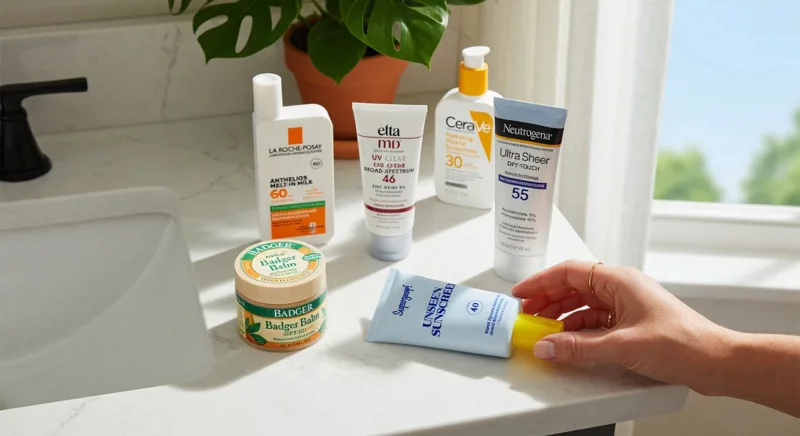
Learning how to read a sunscreen label beyond the SPF number can make choosing daily sun protection much easier. SPF matters, but broad-spectrum coverage, active ingredients, water resistance, and skin-friendly formulas all determine how well a product fits your routine.
Start With “Broad Spectrum”
SPF mainly measures protection against UVB rays, which are the primary cause of sunburn. UVA rays penetrate more deeply and contribute to premature skin aging, dark spots, and skin damage. A sunscreen labeled broad spectrum is designed to protect against both UVA and UVB radiation.[3][5]
For everyday use, broad-spectrum protection is more informative than choosing a high SPF alone. A product with SPF 50 that does not provide broad-spectrum coverage may leave your skin less protected from UVA exposure.
Understand What SPF Really Means
SPF stands for sun protection factor. It indicates how well a sunscreen protects against sunburn under standardized testing conditions, not how long you can stay outdoors without reapplying.[3][5]
The American Academy of Dermatology recommends choosing sunscreen with an SPF of 30 or higher.[1][2] However, SPF 100 does not mean you can apply it once and forget about sun protection. Sweating, swimming, rubbing, and insufficient application can reduce coverage at any SPF level.
- SPF 30: A practical minimum for routine protection.
- SPF 50: Useful for extended outdoor exposure, intense sunlight, or people who tend to apply too little.
- Very high SPF: Still requires thorough application and regular reapplication.
Check the Active Ingredients
The “active ingredients” section identifies the compounds that protect your skin from ultraviolet radiation. The rest of the ingredient list describes the product’s texture, preservatives, fragrance, moisturizers, and other supporting components.[3]
Mineral sunscreen ingredients
Zinc oxide and titanium dioxide are mineral, or physical, sunscreen ingredients.[2] They are often chosen by people with sensitive skin because mineral formulas can be less irritating for some users. Zinc oxide is especially useful in broad-spectrum products because it helps protect against both UVA and UVB rays.
Chemical sunscreen ingredients
Chemical sunscreens use UV filters such as avobenzone, octocrylene, octisalate, or other approved ingredients. These formulas are often lightweight and easy to spread, which may make consistent daily application more comfortable.
Neither category is automatically “better” for everyone. The most effective sunscreen is one that provides broad-spectrum protection and that you will apply generously and regularly.
Look for the Water-Resistance Time
“Water resistant” does not mean waterproof. Under U.S. labeling rules, a sunscreen can claim water resistance for either 40 minutes or 80 minutes after swimming or sweating.[1][4][6]
Choose a water-resistant sunscreen for exercise, beach days, outdoor work, or humid weather. Reapply after swimming, towel drying, or heavy sweating—even if the stated time has not passed.
- Water Resistant (40 minutes): Protection is maintained for up to 40 minutes in water under testing conditions.
- Water Resistant (80 minutes): Protection is maintained for up to 80 minutes in water under testing conditions.
- No water-resistance claim: The product may be suitable for ordinary daily use but is not tested for this specific claim.
Read the Directions, Not Just the Front Label
A sunscreen label’s directions explain how to apply the product and when to repeat the application. Many people use far less sunscreen than testing conditions require, which can reduce real-world protection.
- Apply sunscreen generously to exposed skin before going outdoors.
- Cover commonly missed areas, including the ears, neck, hairline, hands, tops of the feet, and lips when using a suitable lip product.
- Reapply at least every two hours when outdoors, and more often after swimming or sweating.
- Use sunscreen alongside shade, protective clothing, and a wide-brimmed hat.
For the face, many adults use approximately two finger-lengths of sunscreen, although the correct amount varies by product and body size. Sprays require careful, even coverage and should not be inhaled.
Evaluate Skin-Care Claims Carefully
Words such as “hydrating,” “matte,” “tinted,” “oil-free,” and “fragrance-free” describe the formula’s experience, not necessarily its level of UV protection. These claims can still help you choose a product that fits your skin type.
- Oily or acne-prone skin: Look for lightweight, non-comedogenic, or oil-free formulas.
- Dry skin: A moisturizing sunscreen may reduce the need for a separate daytime moisturizer.
- Sensitive skin: Fragrance-free mineral sunscreen may be a useful option.
- Dark spots or melasma: A tinted sunscreen containing iron oxides may help reduce visible-light exposure, although it should not replace broad-spectrum SPF.
“Natural,” “clean,” or “reef-friendly” language can be difficult to compare because these terms may not have one consistent meaning. The active ingredients, broad-spectrum statement, SPF rating, and water-resistance claim provide more useful information.
A Simple Sunscreen Label Checklist
Before buying sunscreen, check for these essentials:
- Broad-spectrum protection
- SPF 30 or higher
- Water resistance when needed
- Active ingredients you tolerate well
- A texture you will apply generously
- Directions that match your planned activity
- An expiration date or intact product condition
The Bottom Line
Reading a sunscreen label beyond the SPF number helps you choose protection based on real-life needs. Start with broad-spectrum coverage and SPF 30 or higher, then consider water resistance, active ingredients, skin type, and how easily the formula fits your daily routine. The best sunscreen is not simply the one with the biggest number—it is the one you apply correctly, reapply consistently, and use alongside other sun-protective habits.