Why Lab Skills Still Matter in a Digital Health Era
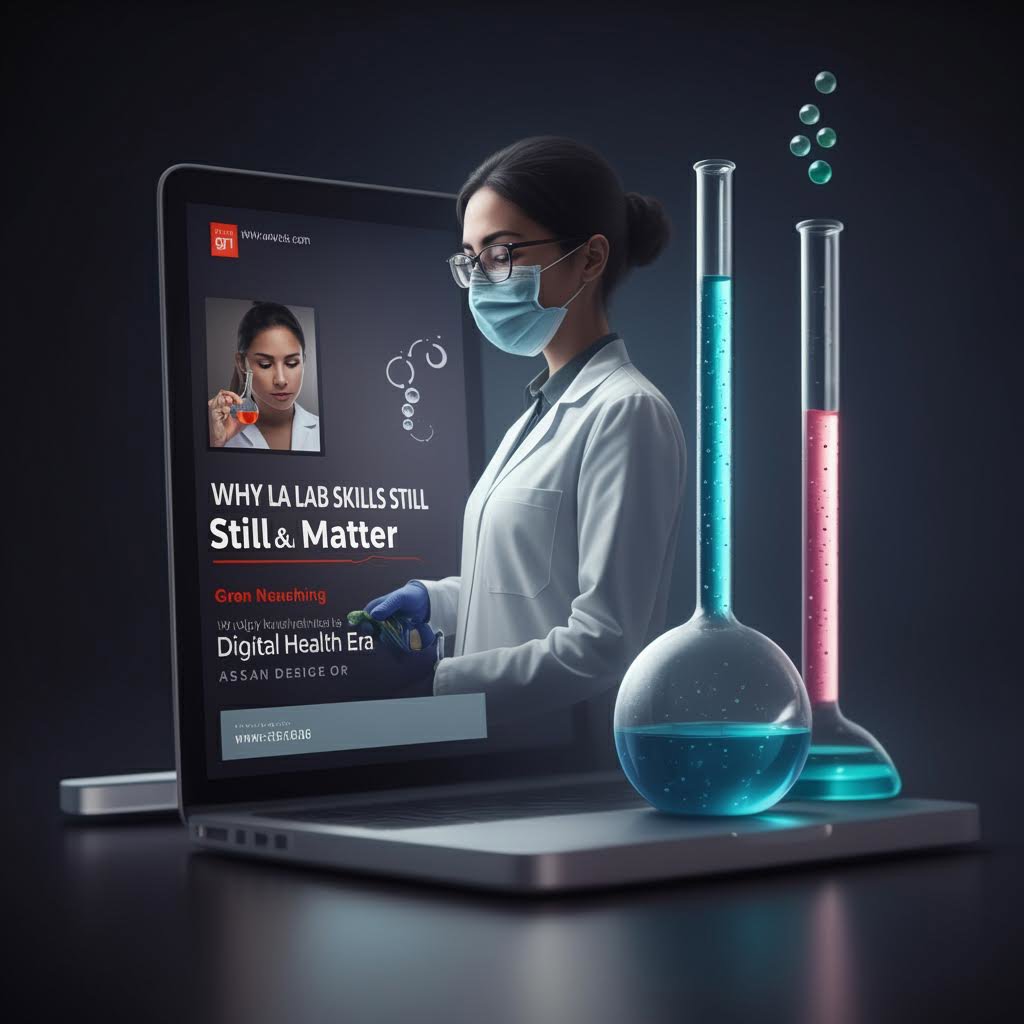
In a world obsessed with digital health breakthroughs, the humble laboratory skillset is quietly holding its ground. Here’s why hands-on expertise remains the backbone of modern medicine—even as AI and automation take center stage.
The Digital Health Revolution: Promise and Paradox
The digital health era is transforming laboratories at breakneck speed. Artificial intelligence, machine learning, and cloud-based systems are now integral to how scientific data is managed, analyzed, and shared. Automated robots handle repetitive tasks, cloud platforms enable global collaboration, and AI-driven systems promise unprecedented efficiency and accuracy in diagnostics and research.
So, with all this technological wizardry, do traditional lab skills still matter?
Lab Skills: The Unseen Foundation
Despite the digital surge, core laboratory skills remain irreplaceable. Here’s why:
-
Quality Control and Error Detection: Automation can streamline processes, but it’s the trained eye of a skilled technician that catches subtle anomalies—a miscalibrated pipette, a contaminated sample, or an unexpected reaction. Machines excel at repetition, but humans excel at noticing the unexpected.
Even the most advanced AI can’t replace the intuition honed by years at the bench. -
Critical Thinking and Troubleshooting: When an experiment fails or a result seems off, it’s not an algorithm that investigates the root cause—it’s a scientist with hands-on experience. Digital systems can flag errors, but only skilled professionals can interpret, troubleshoot, and resolve complex issues.
Lab skills are the safety net when technology falters. -
Innovation and Experimentation: Many scientific breakthroughs begin with a hunch, a tweak, or a novel approach at the bench. While AI can optimize known protocols, it’s the human touch that drives creative experimentation and serendipitous discovery.
Innovation thrives where digital meets dexterous.
Digital Tools: Enhancing, Not Replacing, Human Expertise
The latest trends in laboratory technology—automation, AI, and cloud-based ecosystems—are designed to amplify human capability, not eliminate it. Automated systems handle high-throughput screening and repetitive tasks, freeing scientists to focus on complex research and critical analysis.
AI-powered co-scientists are revolutionizing efficiency, but they still rely on human oversight and interpretation[1][2][3].
The Skills Gap: A Growing Concern
As laboratories become more digital, the demand for professionals who can bridge the gap between traditional lab work and digital fluency is skyrocketing. According to recent reports, 78% of lab leaders are concerned about the skills and expertise gap, and 95% believe upskilling is essential for the future[1].
Digital literacy is now a must-have, but so is hands-on proficiency.
Education: Blending Digital and Practical Competencies
Medical and scientific education is evolving to reflect this new reality. Frameworks like the DECODE model emphasize both digital health competencies and foundational laboratory skills. The goal? To produce professionals who are as comfortable with a pipette as they are with a data dashboard[4].
Tomorrow’s scientists must be bilingual: fluent in both code and chemistry.
Remote and Virtual Labs: Expanding, Not Replacing, Experience
Virtual and remote labs are making science more accessible, allowing students and researchers to simulate experiments and collaborate globally. But these platforms are supplements, not substitutes. Nothing replaces the tactile learning and muscle memory developed at the bench[1].
Virtual labs teach theory; real labs teach reality.
Why Lab Skills Still Matter—Now More Than Ever
- Ensuring Data Integrity: Digital systems are only as reliable as the data they receive. Skilled technicians ensure samples are collected, prepared, and processed correctly, safeguarding the accuracy of downstream digital analysis.
- Adapting to the Unexpected: In a crisis—be it a pandemic, equipment failure, or novel pathogen—lab professionals with hands-on expertise are the first responders, adapting protocols and innovating solutions on the fly.
- Ethical and Professional Judgment: Digital health raises new ethical questions. Professionals with a strong foundation in laboratory practice are better equipped to navigate issues of data privacy, consent, and patient safety.
The Future: Synergy, Not Supremacy
The future of healthcare isn’t a choice between digital and manual—it’s a synergy. Lab skills and digital tools are partners, not rivals. As technology continues to evolve, the most valuable professionals will be those who can harness both: blending the precision of machines with the insight of human experience.
In the digital health era, lab skills aren’t obsolete—they’re indispensable. The next medical breakthrough will be born not just from code, but from the hands that guide it.